
Last updated October 30, 2026
 Home additions & ADU
 Kitchen remodeling
 Bathroom remodeling
 Roofing
 Windows & doors
 Driveway & pavers
 Fence
Free written scope consultation - allowances, timeline, and change-order rules on paper before a single trade is scheduled
General Contractor Maintenance Checklist for Hesperia Homeowners
A Hesperia roof that passes a casual visual inspection in October can already have UV-degraded sealant around every penetration. That kind of damage only shows up as a ceiling stain after the first hard rain in January, at which point the repair cost has tripled. Most home maintenance checklists are written for a generic American suburb. They ignore what 300-plus days of sun, blowing desert sand, and winter freeze-thaw cycles actually do to a house in the High Desert. This guide is different. We built it specifically for Hesperia homeowners, based on the failure modes we see on real homes from the Mesa to Mariana Ranchos. You’ll learn exactly what to inspect, when to inspect it, and what a real problem looks like before it becomes a five-figure bill.
Quick Answer
A Hesperia home maintenance checklist should follow a seasonal rhythm: spring for stucco and window frame inspection after freeze-thaw season, summer for HVAC and sand infiltration checks, fall for roof penetrations and ember-resistant vent cleaning before Santa Ana winds, and winter for drainage and interior moisture monitoring. The tasks that matter most in Hesperia are ones generic checklists skip entirely: sand ingestion into HVAC returns, UV-degraded roof sealant, freeze-thaw stucco cracking, and wildfire ember entry points. Most homeowners can self-document these issues; repairs involving the roof, gas lines, or load-bearing structure need a licensed contractor.
Styles & brands we work with
Table of Contents
- The Hesperia Seasonal Maintenance Calendar
- Sand Infiltration: The Failure Mode No One Talks About
- Freeze-Thaw Damage on Stucco and Concrete
- Roof Penetrations and UV Sealant Failure
- Ember-Resistant Vent and Eave Inspection
- HVAC Maintenance for Dusty High Desert Air
- What to Self-Document vs. When to Call a Licensed Contractor
- Exterior Surface Maintenance: Siding, Stucco, and Flatwork
The Hesperia Seasonal Maintenance Calendar
Here’s the thing about Hesperia: the seasons do not line up with what a national home maintenance calendar tells you. We get rain in winter, not spring. We get wind in fall, not summer. The temperature swings between day and night in spring create expansion and contraction cycles that a coastal home never experiences. Your maintenance calendar has to follow the actual weather pattern, not a template written for Ohio.
Spring, for Hesperia purposes, runs roughly March through May. This is when the overnight freeze-thaw cycle finally ends, which means it’s the first opportunity to see the full extent of winter damage to stucco, concrete, and roof sealant. By April, daytime highs are climbing and the ground has dried out enough to inspect crawl spaces and slab edges without contending with mud. Spring is also the right time to schedule any exterior painting or sealant work, because the temperatures are stable enough for proper curing but not yet hot enough to cause rapid drying and poor adhesion.
Summer is the season most people think of as “maintenance-free” because there’s no rain. That’s backwards. Summer in Hesperia is when your HVAC system carries the entire burden of keeping the house livable, and it’s doing that while ingesting airborne sand and dust every single day. Summer is when window seals fail from thermal expansion. Summer is when wood trim and fascia dry out, crack, and separate. The best time to inspect for these issues is early summer, before the worst heat arrives and while any needed repairs can be done without rushing.
Fall, specifically October and November, is when the Santa Ana wind pattern begins. This is the most critical window for fire-safety maintenance. Gutters and roof valleys that have accumulated dust, leaves from the handful of desert-adapted trees that drop foliage, and loose debris need to be cleared. Vents need to be checked for ember resistance. The first freeze usually hits between late October and mid-November, so any exposed pipe insulation, hose bib covers, or exterior faucet protection needs to be in place before that.
Winter, December through February, is when Hesperia actually gets rain. The average annual rainfall is only around seven to eight inches, but it tends to arrive in a handful of concentrated storms rather than spread evenly. When the ground is already saturated and a storm drops two inches in a day, drainage failures reveal themselves fast. Winter is the time to watch for interior moisture, check that downspouts are directing water away from the foundation, and verify that the roof is actually shedding water the way it’s supposed to. For ongoing renovations or remodels, winter is also a reasonable time to plan interior work. A Home Remodeling in Hesperia project scheduled for the cooler months avoids the scheduling crunch that hits every contractor in spring.
Sand Infiltration: The Failure Mode No One Talks About
Blowing sand is the single most underrated destructive force on a Hesperia home. It gets into places water never reaches. It abrades surfaces. It clogs drainage channels. It fills weep holes. And because sand is invisible until it accumulates, most homeowners never realize it’s happening until a mechanical system fails or a window frame starts holding moisture.
The first place sand accumulates is HVAC returns and ductwork. Hesperia homes pull in outside air through the return system, and when the wind is blowing fine sand across the Victor Valley, that sand ends up in your filters, your blower motor, and eventually your ductwork. A filter that looks dirty after three weeks instead of three months is your signal that sand infiltration is happening. The fix is straightforward: upgrade to a higher MERV-rated filter during wind season, check the filter monthly from September through November, and have the blower assembly inspected annually for grit accumulation on the fan blades.
Window frames and door thresholds are the second infiltration point. Sand works its way into the tracks of sliding windows and sliding glass doors, where it grinds against the rollers every time the window opens and closes. Over time, this wears the rollers flat and scores the aluminum track, which leads to windows that stick, leak air, or refuse to seal. You’ll see the warning signs: a grinding noise when operating the window, visible sand accumulation in the bottom track, or a window that suddenly requires two hands to close. Blowing the tracks out with compressed air twice a year and wiping the weatherstripping with a silicone-based protectant prevents most of this.
Weep holes at the base of stucco walls are a third area to watch. Weep holes are the small gaps left at the bottom of the stucco system to let trapped moisture escape. When blowing sand fills those holes, moisture gets trapped inside the wall cavity and has no way out except through the interior drywall. Homeowners in Hesperia neighborhoods near open desert, like the areas east of the I-15, deal with this more than those in more established areas with mature landscaping. A quarterly visual check of your weep holes takes five minutes. If you see sand building up at the bottom of an exterior wall, clear it away with a small brush or low-pressure air. If you notice interior drywall staining near floor level on an exterior wall, that’s a sign moisture has been trapped and you need a professional evaluation before mold develops.
Freeze-Thaw Damage on Stucco and Concrete
Most people associate freeze-thaw damage with cold climates like the Midwest or Northeast. What they don’t realize is that Hesperia gets freeze-thaw cycles throughout the winter: daytime highs in the 50s and 60s, overnight lows in the 20s. When moisture gets into a hairline crack in stucco or concrete and the temperature drops below freezing, the water expands as it turns to ice. That expansion widens the crack. The next rain gets deeper into the now-larger crack, the next freeze widens it further, and over the course of a single winter, a hairline crack can become a structural opening.
The right way to handle this is to document and track. Every year, ideally in late fall before the first freeze, walk the perimeter of your home with a camera or your phone. Photograph every crack in the stucco, every joint in the concrete flatwork, and every transition between materials. Save those photos in a dated folder. The following fall, take the same photos from the same angles and compare. A crack that hasn’t changed in a year is cosmetic. A crack that has widened, lengthened, or started to show spalling (chunks of concrete or stucco flaking away) is a moisture entry point that needs sealing before the next freeze-thaw cycle. We’ve seen stucco cracks in Hesperia that doubled in width over two winters because nobody was tracking them.
Concrete flatwork deserves the same treatment. Driveways, walkways, and patio slabs in Hesperia are exposed to UV degradation on top of freeze-thaw cycling, which means the surface spalls faster than concrete in a coastal climate. Spalling looks like small divots or flaking where the top layer of concrete has broken away. If you catch it early, a concrete resurfacer or sealant application stops the damage. If you ignore it for three to four winters, the slab can develop structural cracks that require removal and replacement. A General Contractor in Hesperia can evaluate whether your existing flatwork is a candidate for repair or whether replacement is the more cost-effective long-term move.
Roof Penetrations and UV Sealant Failure
Every place a pipe, vent, chimney, or skylight comes through your roof is sealed with some kind of sealant, flashing, or boot. In most climates, that sealant lasts 10 to 15 years. In Hesperia, with the UV index sitting in the very high to extreme range for most of the year, the lifecycle is closer to five to seven years. By the time a sealant failure shows up as a ceiling stain, water has been getting into the roof assembly for weeks or months, and the repair is no longer a simple re-seal. It’s insulation replacement, drywall repair, and potential mold remediation.
The inspection process doesn’t require getting on the roof. From the ground with a pair of binoculars, or from an upstairs window, you can see most of the roof surface and all of the penetrations. What you’re looking for: sealant that has changed color from dark gray or black to chalky white or gray, sealant that has pulled away from the pipe or flashing leaving a visible gap, rubber boots (on plumbing vents) that show surface cracking, and any flashing that appears lifted or distorted. In Hesperia, we also see UV damage to ridge cap sealant and valley metal sealant, which is harder to spot from the ground. That’s the kind of thing a roofer on a maintenance visit can check.
The frequency matters more than the thoroughness. A good ground-level inspection twice a year, once in spring after the winter rain and once in fall before the heaviest wind and any winter storms, catches most failures before they become interior problems. If you see something that looks wrong, mark it with a photo and call for a professional evaluation. Roof work is one of the few areas where we strongly recommend against the DIY approach. A fall from a Hesperia roof onto hard desert ground is not a minor injury, and the risk is not justified by the inspection savings.
Ember-Resistant Vent and Eave Inspection
Hesperia sits in a high fire hazard severity zone. The parcels on the eastern edge of the city, the areas that back up to open land near the Mojave River or the foothills, and the neighborhoods with older construction all face real wildfire ember exposure. During a wildfire, the primary ignition vector for homes is not the flame front itself. It’s embers carried half a mile or more on the wind, landing in gutters, on roofs, in vents, and under eaves, where they smolder and ignite combustible material.
The inspection protocol for ember resistance is specific and repeatable. Walk the entire perimeter of your home and look at every vent: foundation vents, attic vents, gable vents, eave vents, soffit vents. The screens on these vents should be made of corrosion-resistant metal mesh with openings no larger than 1/8 inch. If you can push a pencil through the mesh openings, an ember can get through. Look for screens that have rusted, pulled away from the frame, or been damaged by birds or rodents. In Hesperia, the dryness and temperature swings also cause old plastic vent covers to become brittle and crack, which creates an ember entry point even when the mesh itself is intact.
Gutters and roof valleys are the second ember concern. Embers collect where debris collects. A gutter full of dry pine needles, leaves, or accumulated dust and debris becomes a fire starter the moment an ember lands in it. The standard public-safety recommendation is to clean gutters at least twice a year. In Hesperia, with the Santa Ana season starting in October, the fall cleaning is the one that matters most. The spring cleaning matters for water drainage; the fall cleaning matters for fire safety.
Eaves and the underside of roof overhangs deserve a close look too. On older Hesperia homes with exposed rafter tails or open eave construction, embers can lodge in the gaps between rafters. If your home has open eaves, that’s a conversation worth having with a contractor about enclosing them. On more modern homes with closed eaves, check that the soffit panels are intact and sealed, with no visible gaps where panels meet walls or where utility lines penetrate the soffit.
HVAC Maintenance for Dusty High Desert Air
Your HVAC system in Hesperia works harder than the same system in a coastal city. It runs more hours per year because of the summer heat. The air it’s processing contains sand, dust, and fine particulate matter from the open desert. And the temperature differential between the conditioned indoor air and the outdoor air in summer, which can exceed 40 degrees, puts maximum stress on the condenser unit. This is a whole-home systems issue, and it’s one of the areas where a Home Renovation in Hesperia project should include a mechanical systems review.
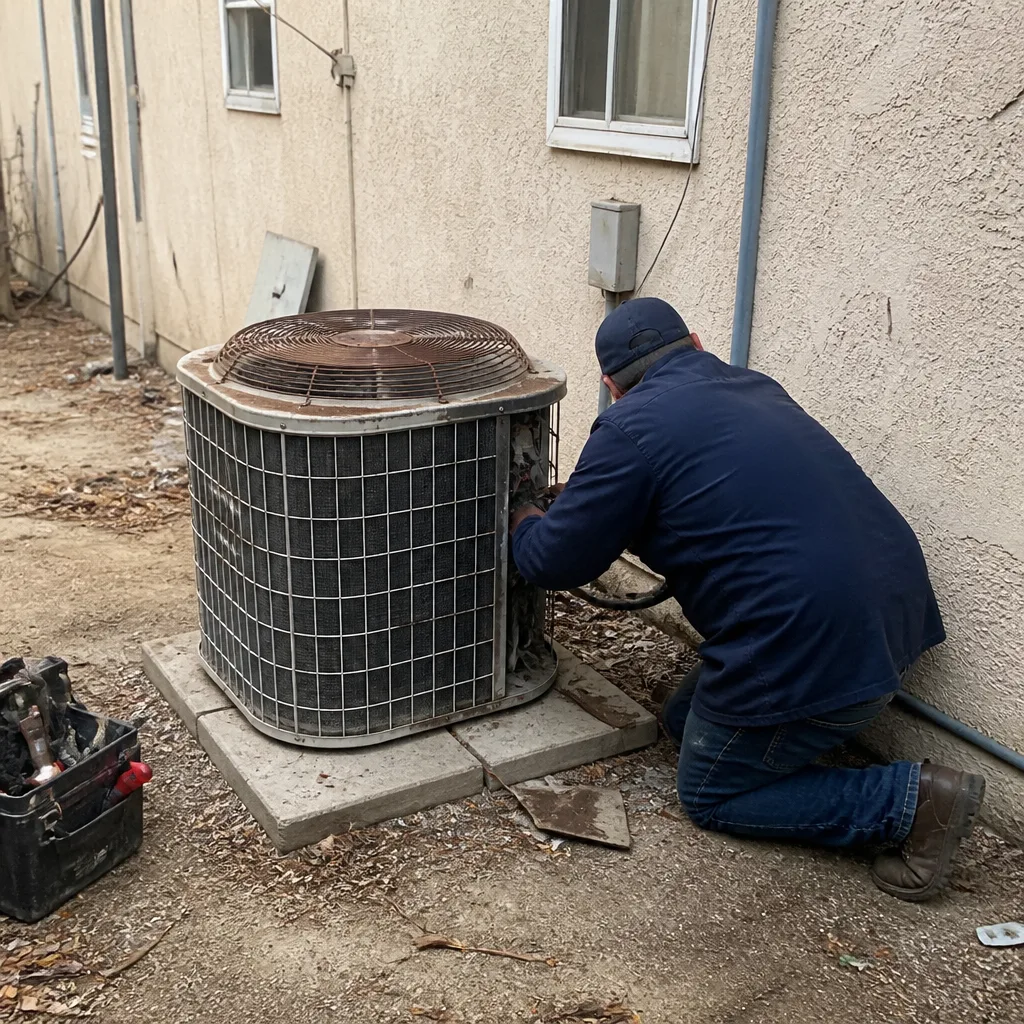
The maintenance checks that matter here are straightforward. Change the filter monthly during peak summer and wind season, or whenever the filter looks visibly dirty. Inspect the outdoor condenser unit for sand and debris buildup on the fins at least quarterly. Sand that gets baked onto the condenser fins reduces the unit’s ability to shed heat, which drives up energy costs and shortens the compressor’s life. A gentle rinse with a garden hose, with the power to the unit turned off, clears most of it. Have the evaporator coil inspected annually for grit accumulation. And check the condensate drain line every spring before the cooling season starts; in a dry climate, the drain can clog with dried mineral deposits from the hard water Hesperia gets.
The ductwork itself is another maintenance item that often gets ignored. In homes where the ducts run through an unconditioned attic, the temperature extremes cause the duct insulation to degrade faster than in moderate climates. The seams where duct sections connect to each other and to the register boots can separate, which means you’re paying to cool your attic. If you notice one room is consistently warmer than the rest of the house in summer, or if your energy bills have crept up without a corresponding change in usage, duct leakage is a likely culprit.
What to Self-Document vs. When to Call a Licensed Contractor
Here’s the practical division we tell Hesperia homeowners. Self-document everything. Twice a year, take photos of your stucco, your roof from the ground, your concrete flatwork, your window and door tracks, your vents, and your HVAC filters. Store them in a dated folder. That documentation is your early warning system, and it’s also a record that helps any contractor diagnose problems faster when you do call.
The work itself falls into two categories. Safe, manageable, no-specialized-knowledge tasks for a diligent homeowner include: cleaning window and door tracks, re-caulking interior joints and regularly-visible exterior joints at ground level, clearing weep holes, replacing HVAC filters, rinsing condenser fins, checking vent screens, clearing debris from gutters using a ladder with a stabilizer, and photographing/documenting everything. None of these require a license, and all of them make a real difference in preventing bigger failures.
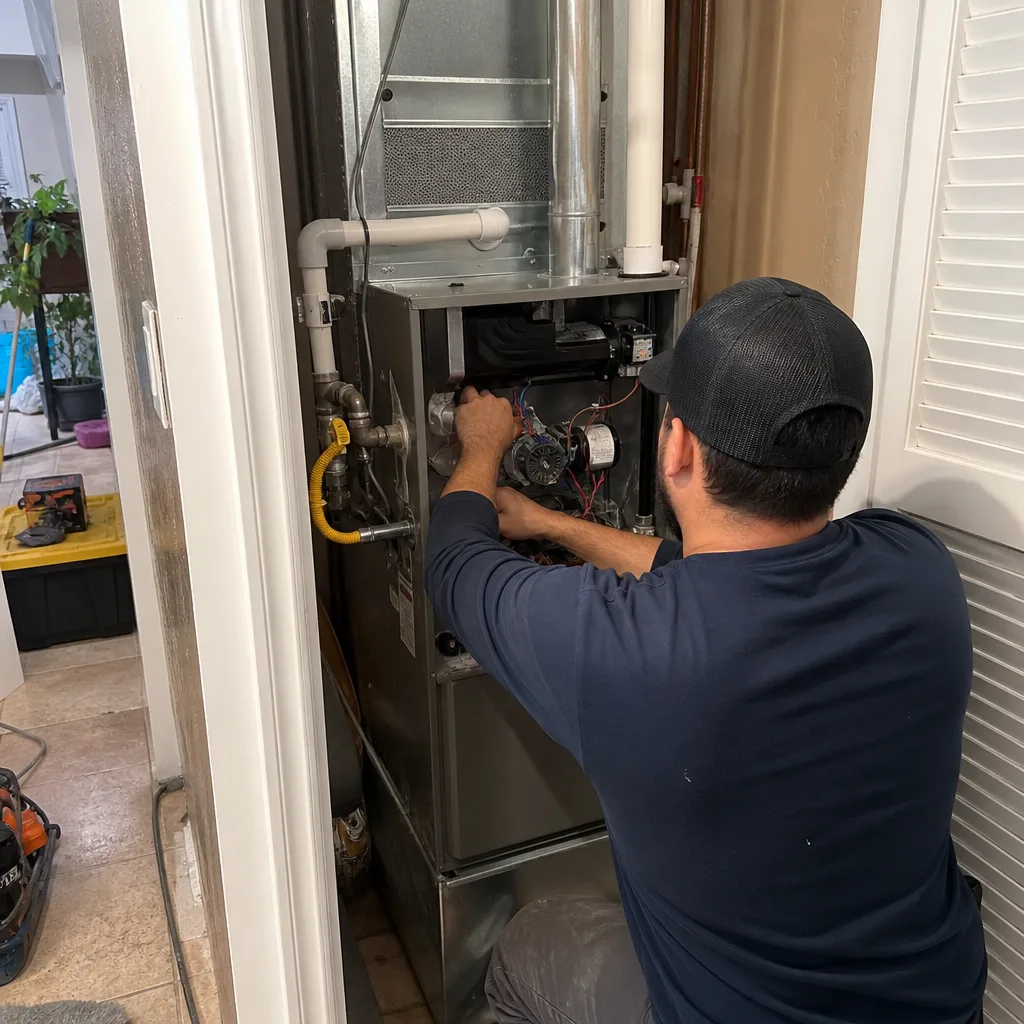
Tasks that genuinely require a licensed contractor include: any roof work beyond ground-level inspection, any work on electrical panels or circuits beyond resetting a breaker, any gas line work, any structural repair involving load-bearing walls or foundation elements, any stucco repair larger than a hairline crack, any window or door replacement, and any work on your HVAC system beyond filter replacement and basic cleaning. The reasoning here isn’t just legal or warranty-related, though both those factors matter. It’s safety. The failure modes in these systems carry real risk of injury or property damage. The question isn’t whether you can watch a YouTube video and figure it out. The question is whether the downside risk of getting it wrong justifies the savings. In most of these cases, it doesn’t.
Exterior Surface Maintenance: Siding, Stucco, and Flatwork
Exterior surfaces in Hesperia take a beating that’s hard to overstate. Between the UV exposure, the sand abrasion, the temperature swings, and the occasional hard rain, your siding or stucco is doing constant work protecting the structure underneath. It deserves an annual inspection and a maintenance plan.
Stucco, the most common exterior finish in Hesperia, fails in a few predictable ways. Hairline cracks are normal and mostly cosmetic if they stay hairline. Crumbling or spalling around the base of the wall, especially near soil contact, indicates moisture wicking up through the stucco and needs professional evaluation. Stucco that has separated from the lath underneath will make a hollow sound when tapped and requires repair. And stucco that’s been repainted multiple times may have a paint layer that’s now sealing moisture in, which creates blistering and eventual sections falling away.
For homes with siding, whether it’s James Hardie fiber cement, vinyl, or engineered wood, the maintenance cadence is similar. Inspect seams and joints every spring. Look at the bottom edges of the siding where it meets the foundation or the soil. Check that the gap is maintained and not bridged by soil, which wicks moisture. Watch for warping, buckling, or separation at the joints, which indicates either moisture intrusion or thermal expansion stress. And if the siding is painted, Hesperia’s UV levels mean the paint on the south and west elevations will fail faster than the paint on the north and east. A repaint cycle tied to elevation rather than the whole house is a practical way to manage maintenance costs.
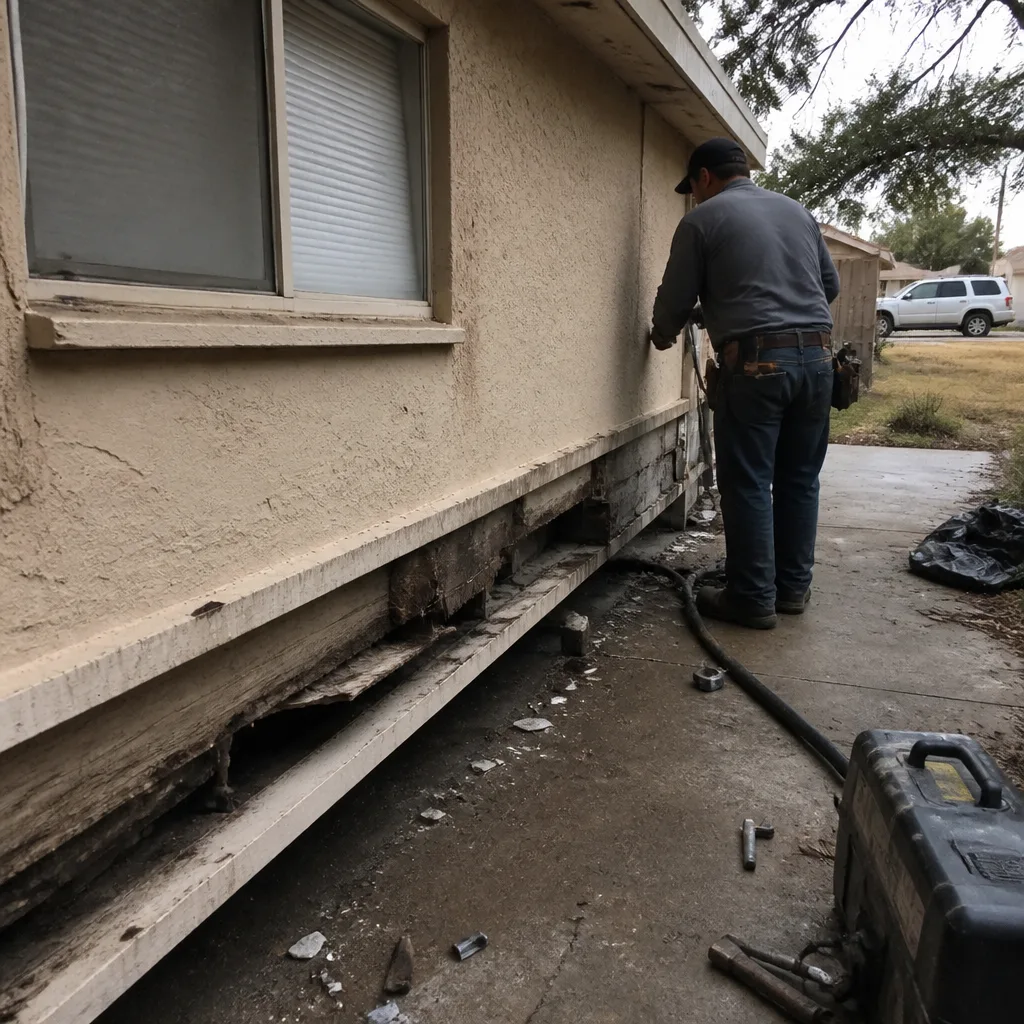
Flatwork, meaning driveways, walkways, and patios, rounds out the exterior surface picture. The big issues in Hesperia are freeze-thaw cracking as discussed earlier, UV surface degradation, and shifting from the expansive clay soils that are common throughout the Victor Valley. A concrete slab that has shifted, creating a trip hazard or a drainage problem, usually requires slab jacking or replacement rather than resurfacing. If you’re planning an exterior remodel that includes hardscaping, working with a contractor who understands the local soil behavior is essential. The patio that looks great in a catalog but gets specified for a different soil type will fail prematurely here.
Common Mistakes to Avoid
- Following a national maintenance calendar instead of a Hesperia one. If your checklist says to inspect for freeze damage in March but you actually live in the High Desert, you’re late. Freeze-thaw damage here needs inspection in late fall before the cycle starts, not after it’s done.
- Ignoring sand in window tracks and HVAC returns. Most homeowners write it off as “just dust” and clean it without asking where it’s coming from. The accumulation rate is the diagnostic signal. If it’s building up fast, you have a sealing problem somewhere.
- Waiting for visible evidence of a roof leak before addressing sealant. By the time the ceiling stains, you’re out of maintenance territory and into repair territory, with a much bigger bill. Ground-level binocular inspection twice a year catches the sealant failure before the water finds a path inside.
- Documenting cracks mentally instead of photographically. “It looks the same as last year” is not documentation. Your memory plays tricks. Dated photos in a folder solve the dispute in three minutes when you’re comparing year over year.
- Assuming a vent screen from 1998 is still ember-resistant. Screens corrode, frames bend, and plastic covers crack. A vent that’s not protecting against embers is a liability in a high fire hazard zone, and replacing screens is one of the cheapest maintenance items on this entire list.
- Putting off gutter cleaning because “it doesn’t rain that much here.” The gutter’s job in Hesperia is as much fire protection as water management. The ember accumulation risk during Santa Ana season is the part that matters most.
- Caulking cracks only on the exterior and calling it done. If moisture already got in through the crack before you sealed it, you’re trapping that moisture inside the wall. Interior inspections alongside exterior sealing are a package deal.
See the difference
 Before
 After
 Before
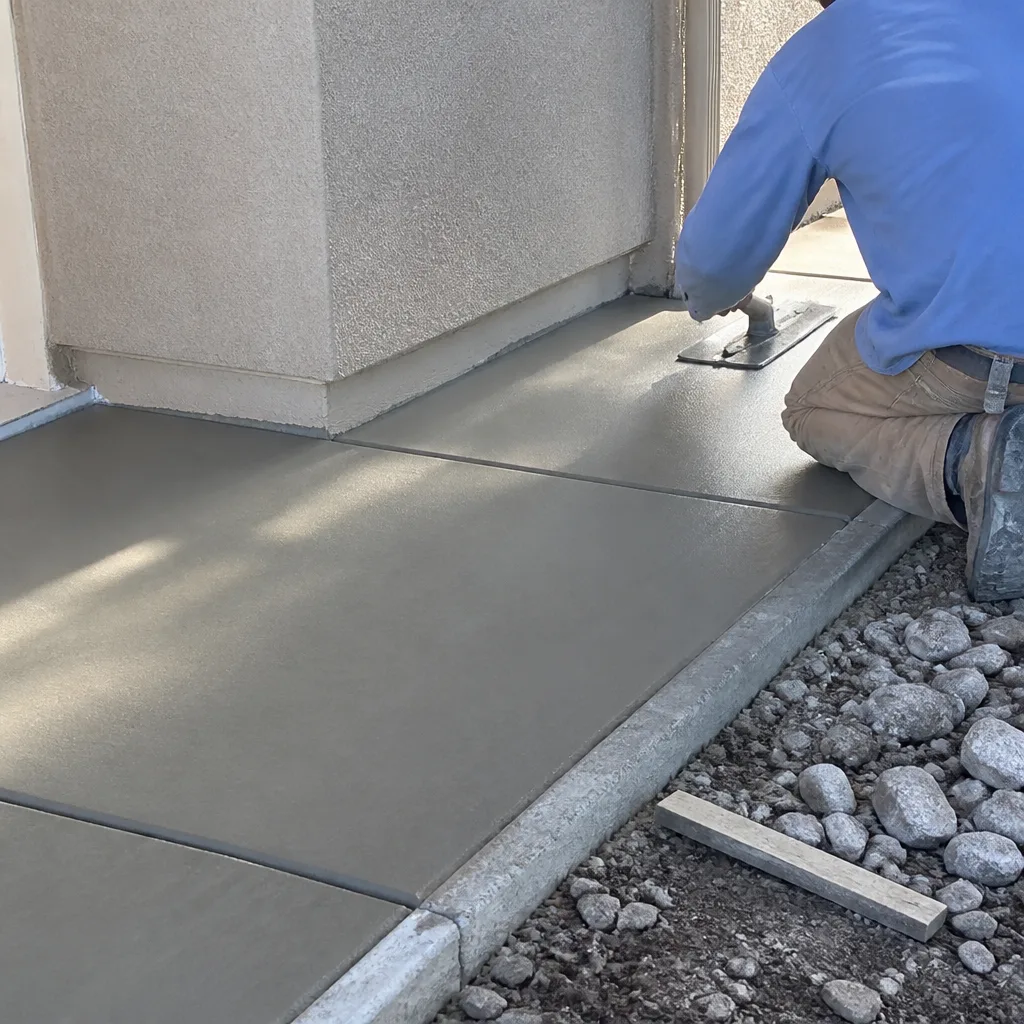 After
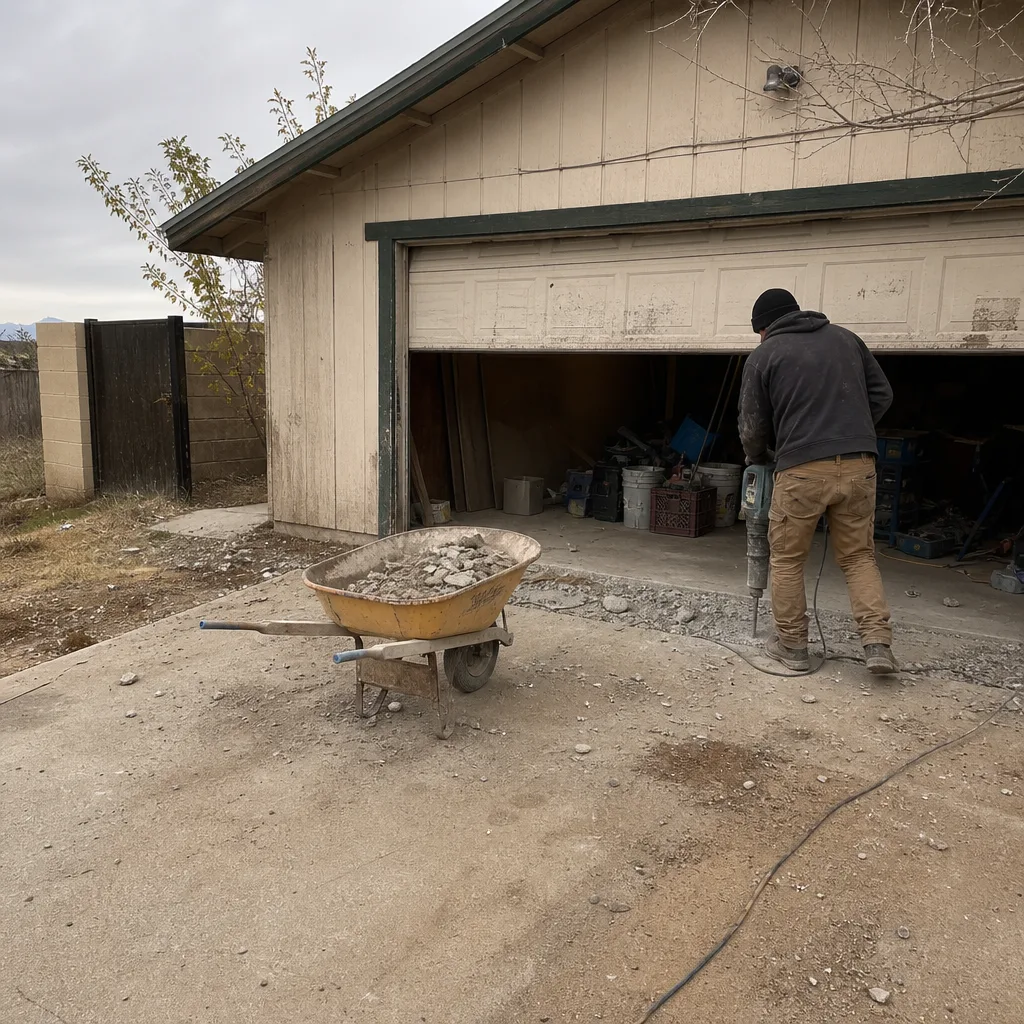 Before
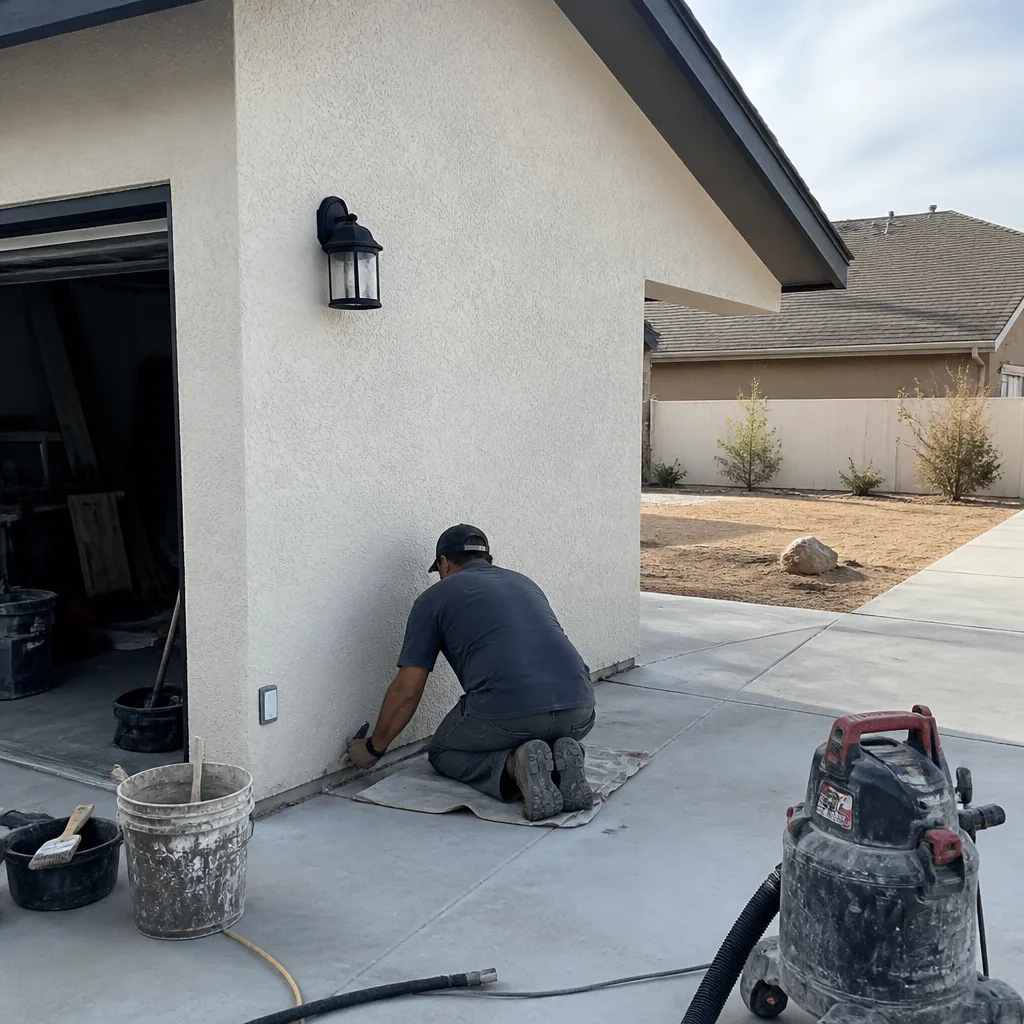 After
When to Call a Professional
Some maintenance findings are informational; some require action. If your documentation shows a stucco crack that’s widening over consecutive seasons, a roof penetration with visibly degraded sealant, a window track that’s scored and grinding, a concrete slab that has shifted enough to trip on, or a vent screen that’s visibly damaged or missing, that’s a call to a professional. In our experience working with Hesperia homeowners, the projects that go smoothly are the ones where the homeowner brings documentation and a specific observation, not a vague concern. “I have photos of a crack expanding over two years” gets a different conversation than “I think my stucco might be bad.” If you need an evaluation, Hampton Contractors home offers free estimates in Hesperia and covers the full scope from exterior repair to interior remediation. Call (833) 467-4075 to schedule a walkthrough.
Frequently Asked Questions
Twice per year is the minimum cadence that catches most High Desert failure modes: once in spring after the winter rain and freeze-thaw season ends, and once in fall before Santa Ana winds and any winter storms begin. Quarterly checks on HVAC filters, window tracks, and weep holes add coverage for sand infiltration, which happens year-round in Hesperia.
Roof penetration sealant degradation from UV exposure is the most commonly missed issue because it’s invisible from the ground without binoculars and causes no symptoms until water intrusion begins. In Hesperia’s extreme UV environment, sealant around vents, pipes, and flashing fails years earlier than manufacturer ratings suggest.
Hairline cracks that haven’t changed over multiple seasons and show no interior moisture signs can be sealed by a careful homeowner using the right elastomeric sealant. Any crack that’s widening, has visible depth, shows spalling, or corresponds with interior wall staining needs a licensed contractor to evaluate the underlying cause before sealing.
Blowing sand abrades weatherstripping, wears out window and door rollers, clogs weep holes that allow walls to drain properly, and gets pulled into HVAC returns where it coats blower motors and clogs condenser fins. The damage is gradual but mechanical: each wind event removes a small amount of material, and the cumulative effect over years shortens component lifespans significantly.
Yes, the inspection is visual and requires no specialized tools. You’re checking that every vent on the home has 1/8-inch or smaller corrosion-resistant metal mesh that’s intact, that gutters and roof valleys are clear of combustible debris, and that eaves and soffits have no gaps where embers could lodge. If you find damaged vents or significant debris accumulation, call a professional for repairs or a thorough cleaning.
Interior renovations run well in late fall and winter when contractor schedules are shorter and the weather doesn’t affect indoor work. Exterior projects, including roofing, siding, stucco work, and hardscaping, are best scheduled for spring or early fall when temperatures and wind conditions are most favorable for proper material installation and curing.
The Bottom Line
Hesperia homes fail differently than homes in other climates, and the maintenance calendar you follow needs to match. The big four in this area are UV-degraded roof sealant, sand infiltration into mechanical and structural systems, freeze-thaw damage to stucco and concrete, and ember exposure during Santa Ana season. All four are preventable with twice-annual documentation, seasonal inspections tied to the actual weather pattern, and a realistic division between what you can self-document and what a licensed contractor should handle. The goal is simple: catch the five-dollar problem in October instead of the five-thousand-dollar problem in January. Build the habit, keep the dated photo record, and act when you see change.
Written by the team at Hampton Contractors, serving Hesperia since 2016.
Planning a repair or a full remodel? Call Hampton Contractors at (833) 467-4075 for a free estimate. We serve the entire Hesperia area, and our team covers everything from General Contractor in Hesperia services to Home Remodeling in Hesperia and Home Renovation in Hesperia.