
Last updated October 30, 2026
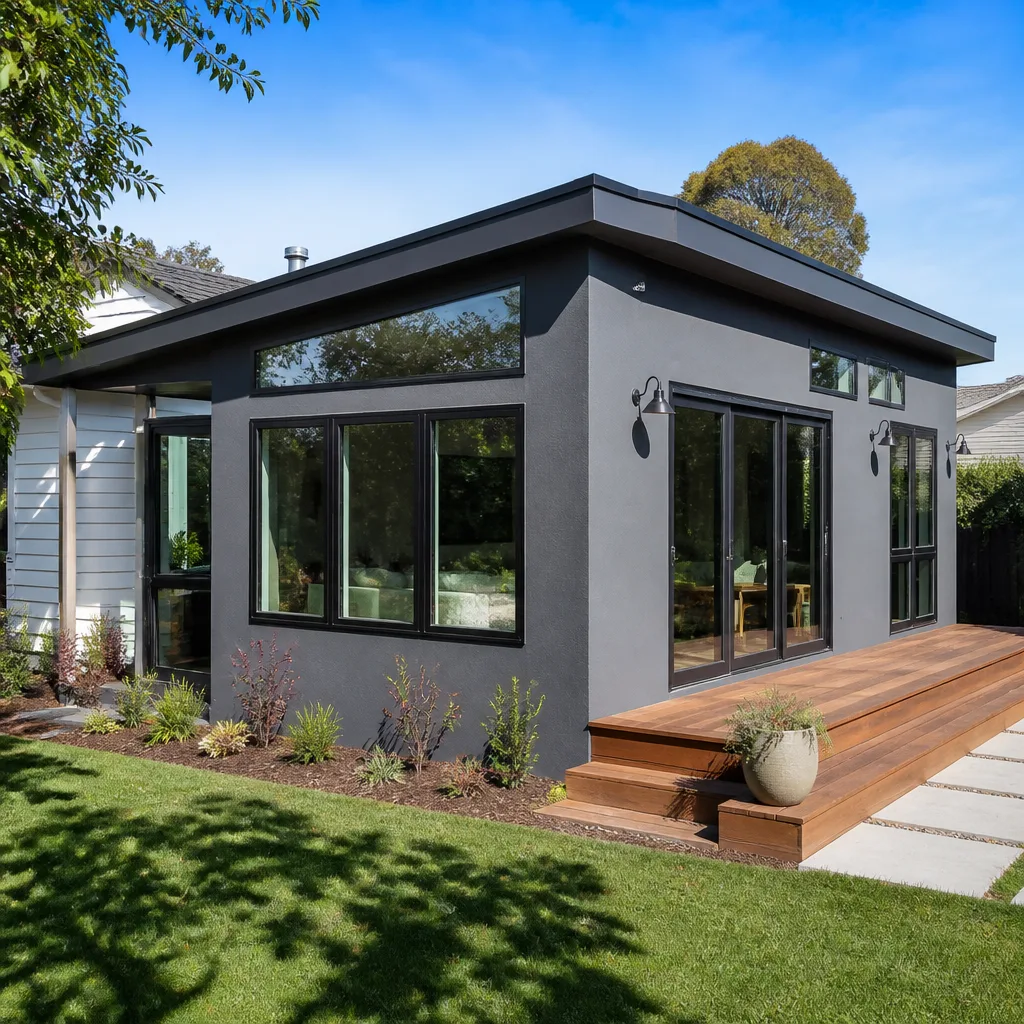 Home additions & ADU
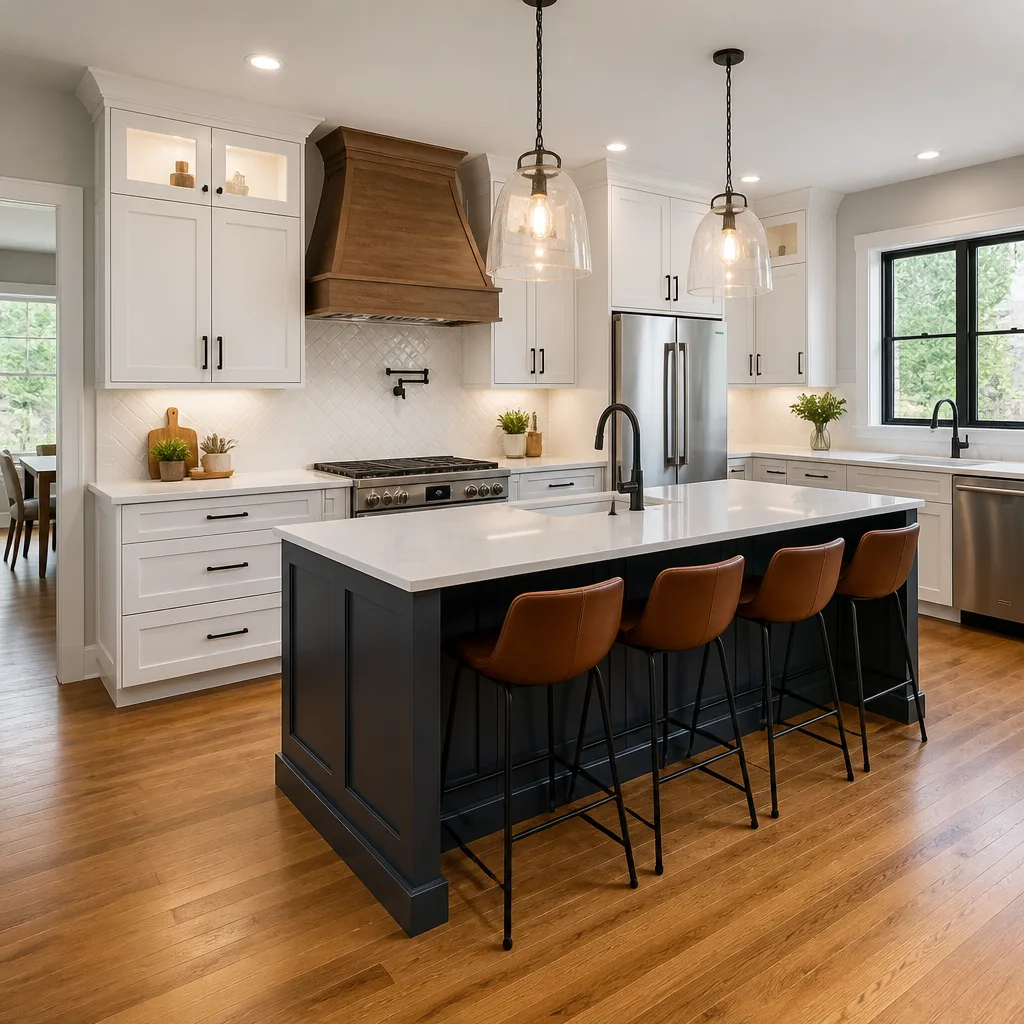 Kitchen remodeling
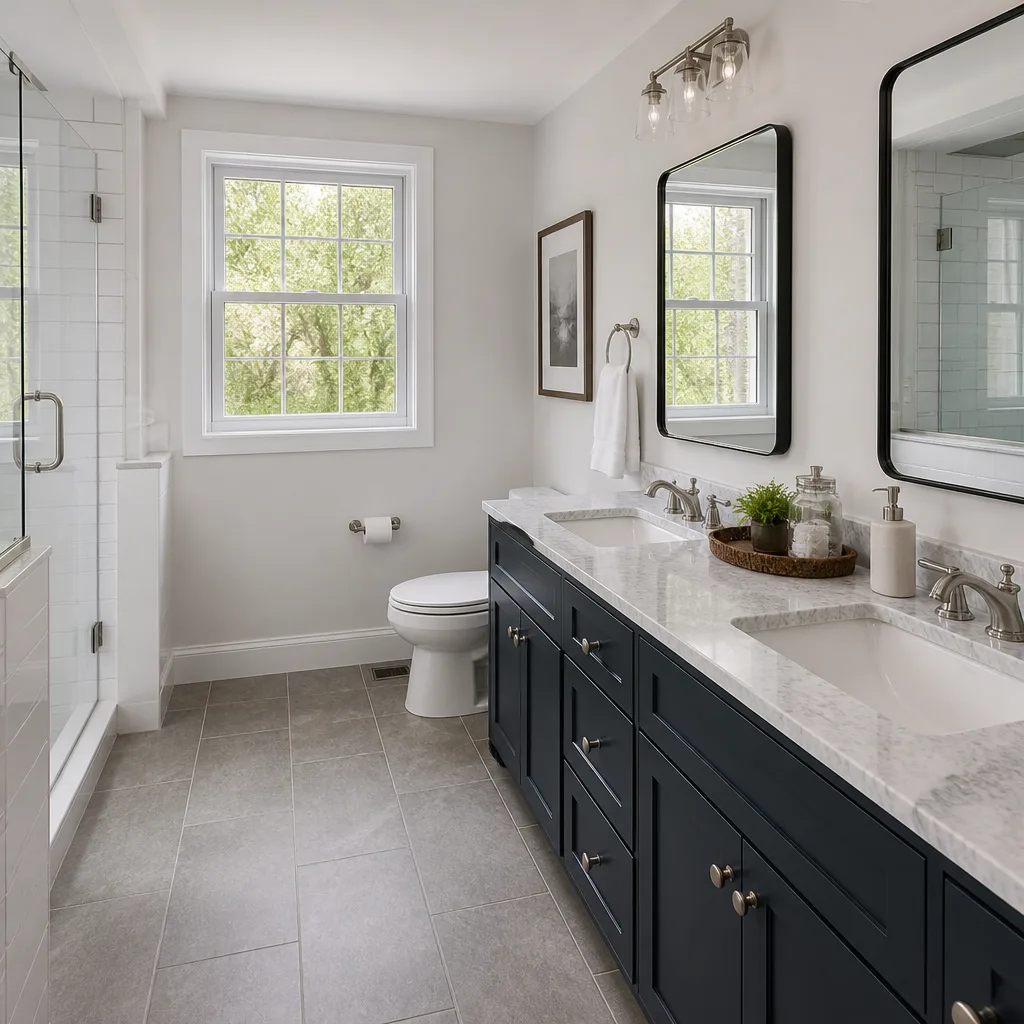 Bathroom remodeling
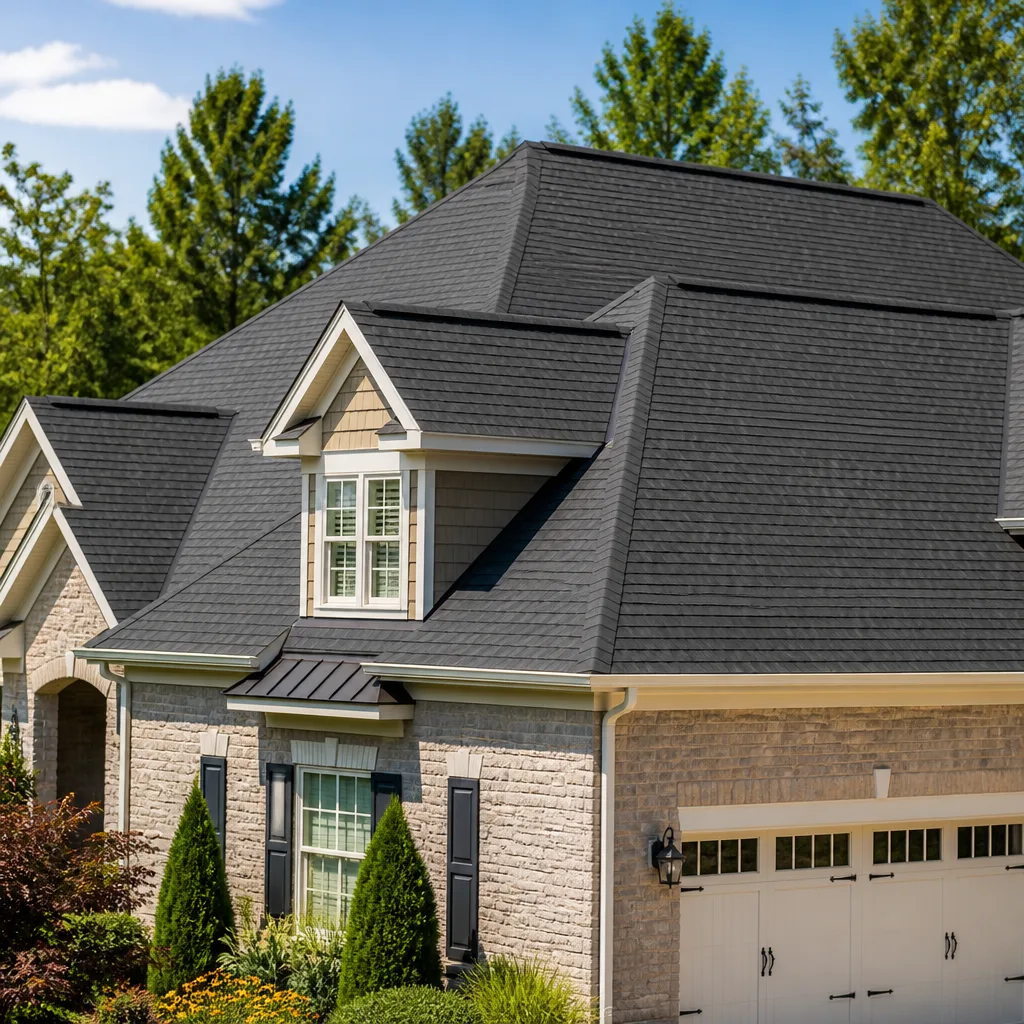 Roofing
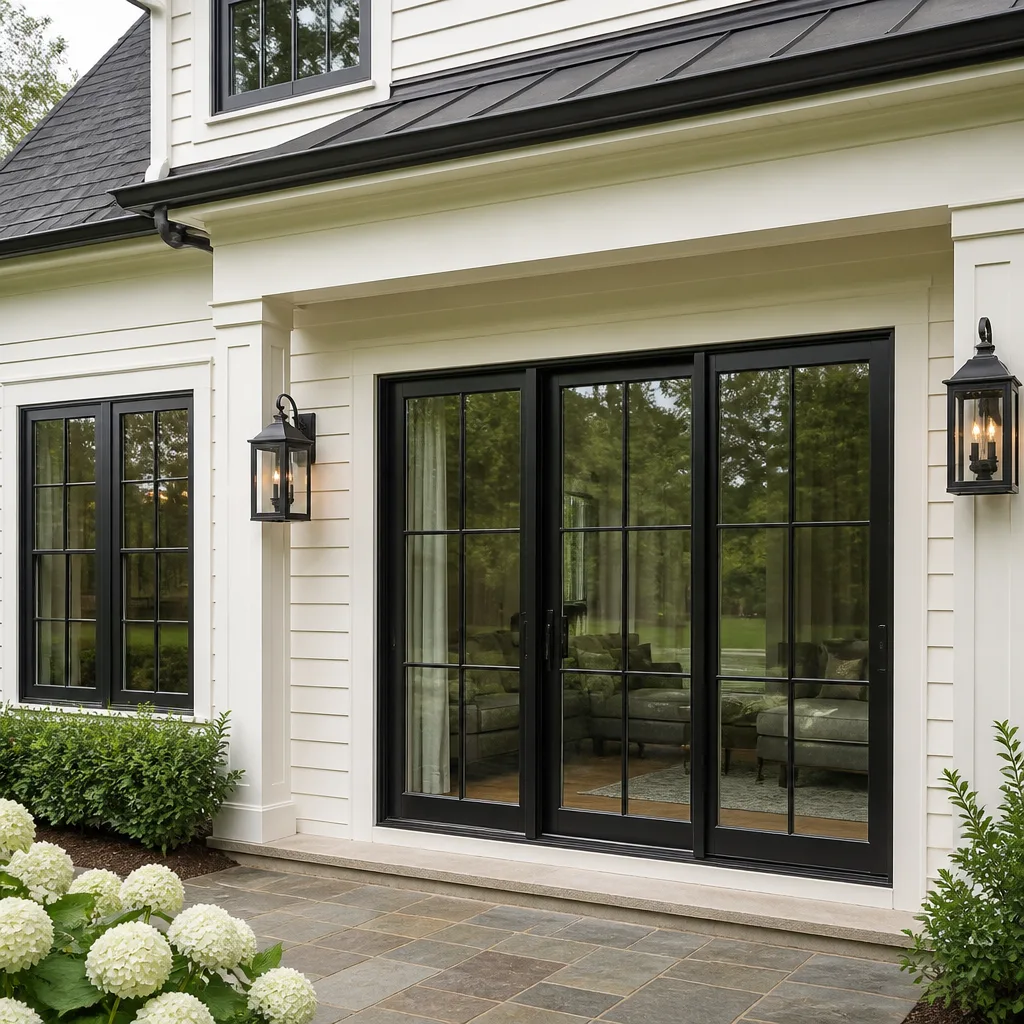 Windows & doors
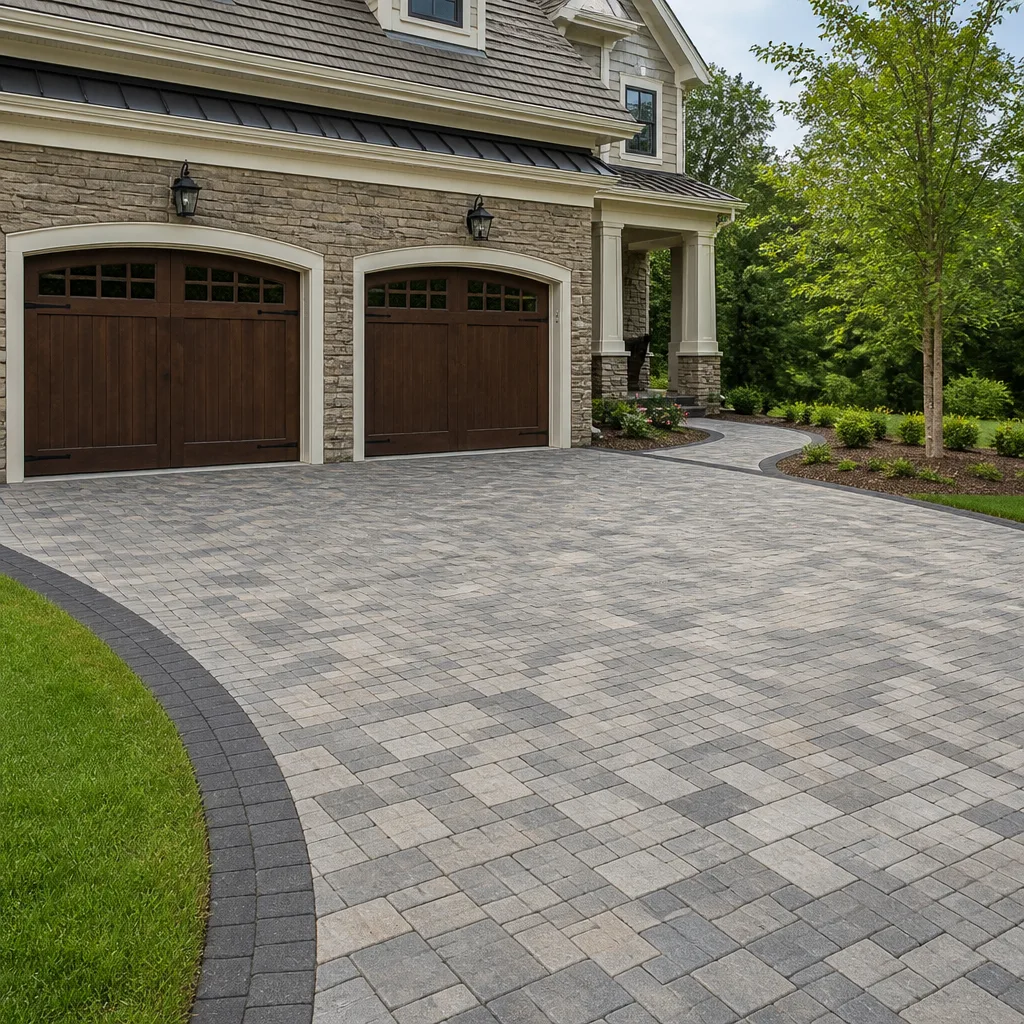 Driveway & pavers
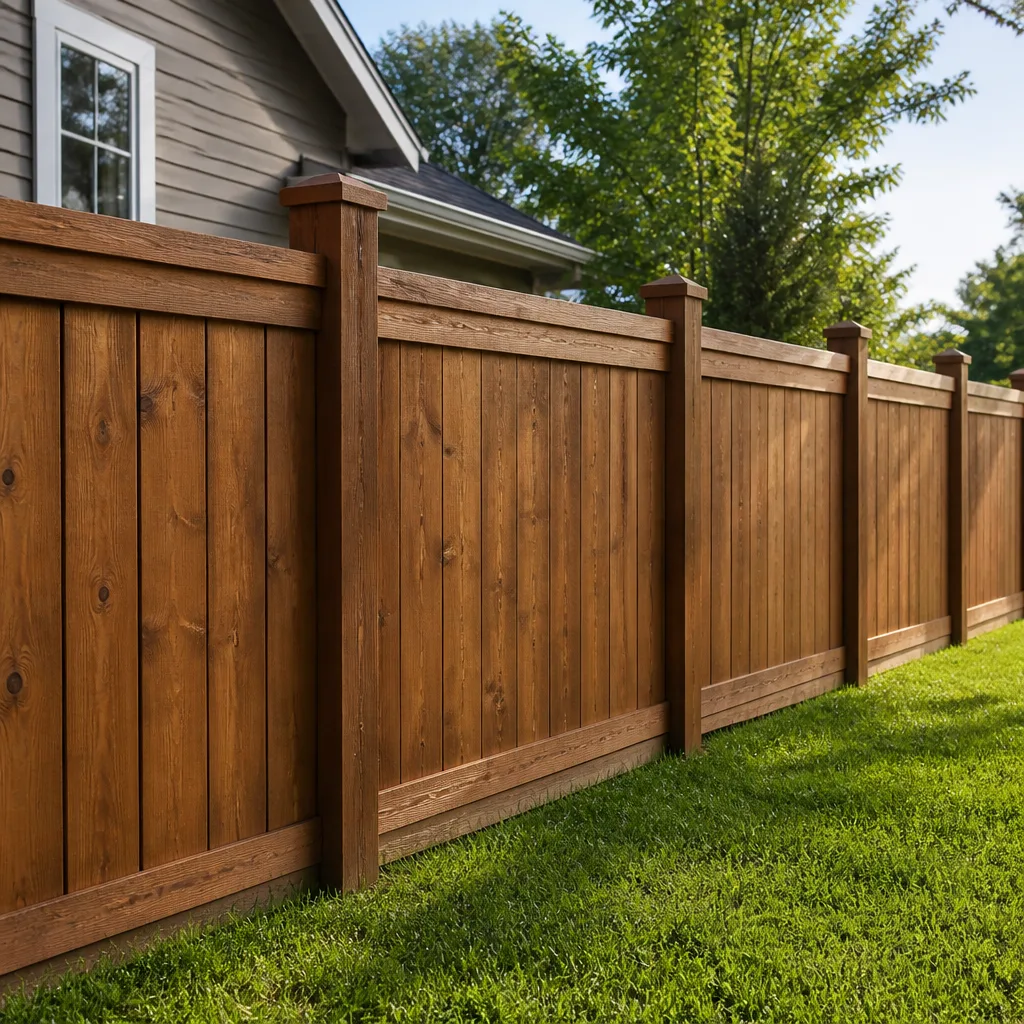 Fence
Free written scope consultation - allowances, timeline, and change-order rules on paper before a single trade is scheduled
Seasonal Construction Care for Hesperia: Year-Round Homeowner’s Guide
Most Hesperia homeowners schedule exterior painting in summer because the weather feels predictable. The problem: surface temperatures on south-facing stucco regularly exceed 150°F in July, which causes latex paint to blister within the first season and voids the manufacturer’s warranty. This guide maps your home’s maintenance calendar to Hesperia’s actual climate conditions, not a generic four-season template that was written for coastal California and falls apart in the High Desert. For more guides & resources, see our blog. You’ll learn which repair windows are non-negotiable, which inspections prevent compounding damage, and when waiting three months saves you a full redo.
Styles & brands we work with
Quick Answer
Hesperia doesn’t have four mild seasons. It has a summer that cracks caulk and fades pigment, a wind season that loads roofs and scours paint, a freeze window that heaves flatwork, and a brief spring that’s the only viable window for certain exterior repairs. Seasonal home maintenance in Hesperia means scheduling work around those four conditions: caulk and paint from late September to early November, wind inspections before Santa Ana season peaks, freeze-thaw checks in February, and below-grade or foundation work in spring. Read our Complete Guide to Construction in Hesperia for more detail.
Table of Contents
- The Summer UV Degradation Timeline: What Hesperia Sun Does to Your Exterior
- The Late September to Early November Paint and Caulk Window: Why It’s the Only One
- Santa Ana Wind Events: Roofing, Gutters, and Outdoor Structures
- Winter Freeze-Thaw: Concrete Flatwork, Irrigation, and Exposed Plumbing
- Why Spring Is the Foundation and Below-Grade Window in the High Desert
- Sequencing a Whole-Home Project Around Hesperia’s Climate
- Material Choices That Hold Up in Hesperia’s Specific Conditions
- Common Mistakes to Avoid
- When to Call a Professional
- Frequently Asked Questions
- The Bottom Line
The Summer UV Degradation Timeline: What Hesperia Sun Does to Your Exterior
Hesperia averages over 280 days of sun per year, and the UV index routinely hits 9 or 10 from May through August. That’s not coastal sun. That’s high-desert sun at 3,200 feet of elevation, where the thinner atmosphere filters less ultraviolet radiation before it reaches your stucco, your shingles, and your deck boards. In our experience, materials that perform fine in Rancho Cucamonga or Ontario degrade visibly faster up here.
Here’s what happens to common exterior materials under Hesperia’s solar load:
- Stucco coatings: Unpainted or lightly pigmented stucco begins showing hairline surface cracks within 3 to 5 years. Darker pigments fade noticeably by year 4. Elastomeric coatings, which stay flexible longer, typically last 7 to 10 years before recoating is needed, but only if applied in the correct temperature window.
- Asphalt shingles: Standard three-tab shingles in Hesperia lose granules faster than the manufacturer’s rated lifespan suggests. Expect visible granule loss on south-facing roof planes by year 8 to 10. Architectural shingles hold up better, but only if the roof deck is properly ventilated. Attic temperatures in Hesperia summers regularly exceed 140°F without adequate ridge and soffit venting, which cooks shingles from underneath.
- Composite decking: Even premium composite boards fade and expand in direct Hesperia sun. Lighter colors show less visible fading, but all composite decking gets hot. Surface temperatures on dark composite boards in July can hit 160°F, which is a barefoot hazard and causes expansion gaps to close. If your deck was installed without the manufacturer’s specified side-to-side gap allowances for high-heat zones, you’ll see buckling by year 3.
- Wood fencing: Untreated or lightly sealed cedar and fir fencing grays and checks within 18 months. Horizontal rails split at fastener points due to the extreme dryness. Metal post brackets last longer than direct wood-to-concrete contact, which traps moisture from winter rain and accelerates rot.
The takeaway: summer is not a repair season in Hesperia. It’s an inspection season. Use the long dry stretch to identify what’s failing, document it, and schedule the actual repair work for the fall window when conditions allow materials to cure properly.
The Late September to Early November Paint and Caulk Window: Why It’s the Only One
Exterior caulk and paint need three things to cure properly: surface temperatures between 50°F and 85°F, low wind, and no direct sun baking the product mid-cure. In Hesperia, those three conditions reliably overlap only from late September through early November. Spring mornings can work, but Santa Ana wind events in April and May routinely kick up dust that embeds in wet paint, and late-spring temperature swings cause caulk to skin over too fast while remaining soft underneath.
When surface temps exceed 90°F, which is every afternoon from June through August, latex paint dries from the outside in. The outer skin forms, the solvents underneath can’t escape, and you get blistering within the first season. That’s not an installation error. That’s physics. The manufacturer’s warranty won’t cover it because the installation fell outside the stated temperature range on the data sheet.
Here’s the sequence we recommend for fall exterior work in Hesperia:
- Late September: Inspect all exterior caulk joints (windows, doors, trim transitions, stucco control joints) and remove anything cracked, separated, or chalky. Midmorning temperatures are typically in the 70s.
- Early October: Apply new caulk to all joints and allow 24 to 48 hours of cure time before priming. Watch the overnight lows, which should still be above 45°F.
- Mid-October: Prime bare or repaired surfaces. Prime doesn’t have the same temperature sensitivity as topcoat, but it still needs dry conditions.
- Late October through early November: Apply topcoat. South-facing walls should be painted on the morning side of the day, and no work should happen after 2 p.m. on warm days when surface temps climb back toward the danger zone.
- Mid-November: Final inspection. Touch-ups after this point are risky because overnight lows start dipping below the point where paint cures properly.
Missing this window means waiting until the following year. It’s better to leave cracked caulk in place for one more winter and fix it properly in fall than to apply fresh caulk in July and have it fail before the first frost.
Santa Ana Wind Events: Roofing, Gutters, and Outdoor Structures
Santa Ana winds in Hesperia are not an occasional nuisance. They’re a recurring structural load that starts as early as September and peaks from October through January. Sustained winds of 30 to 40 mph with gusts over 60 mph are common in the Cajon Pass corridor and along the mesa edges. Those winds do three things: they lift roof edges, they drive dust and debris into every gap, and they turn unsecured outdoor structures into projectiles that damage your own home or your neighbor’s.
What to inspect and secure before November:
- Roof edge and ridge cap: Walk the perimeter and look for lifted shingle tabs, cracked ridge cap mortar, or exposed fasteners on metal drip edge. Wind gets under a loose edge and peels roofing in sheets. At minimum, have a roofer check the windward-facing planes, which on most Hesperia lots means the west and northwest exposures.
- Gutters and downspouts: High desert winds pack gutters with dust, pine needles, and tumbleweed fragments. Clogged gutters overflow during winter rain, and the overflow soaks the fascia and the stucco below. Check hangers and brackets too. A loose gutter in a 60 mph gust acts as a lever that tears the fascia board off with it.
- Patio covers and pergolas: Inspect every post-to-beam and beam-to-rafter connection. Wood shrinkage in Hesperia’s dry air loosens bolts over time. If a pergola has been up for more than 5 years without hardware tightening, it’s overdue.
- Fencing: Solid wood privacy fences act as sails. Check section-to-post connections and post bases. In Mesa Linda and other exposed neighborhoods, wind-load damage to fences is one of the most common claims after Santa Ana events.
- Sheds and outbuildings: Prefab sheds that aren’t anchored to a slab or ground anchors will move. Boxabl and similar prefab structures are engineered for wind loads when anchored per spec, but the anchoring is the part that gets skipped.
A pre-wind-season inspection takes a contractor half a day. A wind-damaged roof repair takes a week and often means interior water damage by the time you realize the flashing is gone.
Winter Freeze-Thaw: Concrete Flatwork, Irrigation, and Exposed Plumbing
Hesperia’s freeze-thaw cycle is different from what most people picture. It doesn’t get cold enough to freeze pipes in walls, but surface temperatures regularly drop below freezing on 20 to 30 nights each winter. The daytime high might be 55°F, and the overnight low hits 28°F. That daily swing is what damages flatwork and irrigation.
Here’s the mechanism: water seeps into hairline cracks in concrete during winter rains, then freezes and expands by roughly 9 percent overnight. The expansion widens the crack. The next day it thaws, more water gets in, and the cycle repeats. Over one winter, a hairline crack becomes a structural crack. Over three winters, a driveway slab that was perfectly pitched starts holding water, which accelerates the cycle further.
The February inspection checklist:
- Walk every concrete surface (driveway, walkways, patios, pool deck) and mark any crack wider than 1/8 inch with chalk. If it grows between February and April, it’s active and needs structural repair, not just patching.
- Check the irrigation system at the backflow preventer and any above-ground valves. Insulated bags help, but if the system wasn’t fully drained in November, you’ll see split valve bodies or cracked PVC at the first pressure test in March.
- Inspect hose bibs and any exposed plumbing on exterior walls. Frost-proof hose bibs fail over time, especially in Hesperia’s hard water, and a failed valve leaks inside the wall cavity where you won’t see it until the stucco stains or the drywall softens.
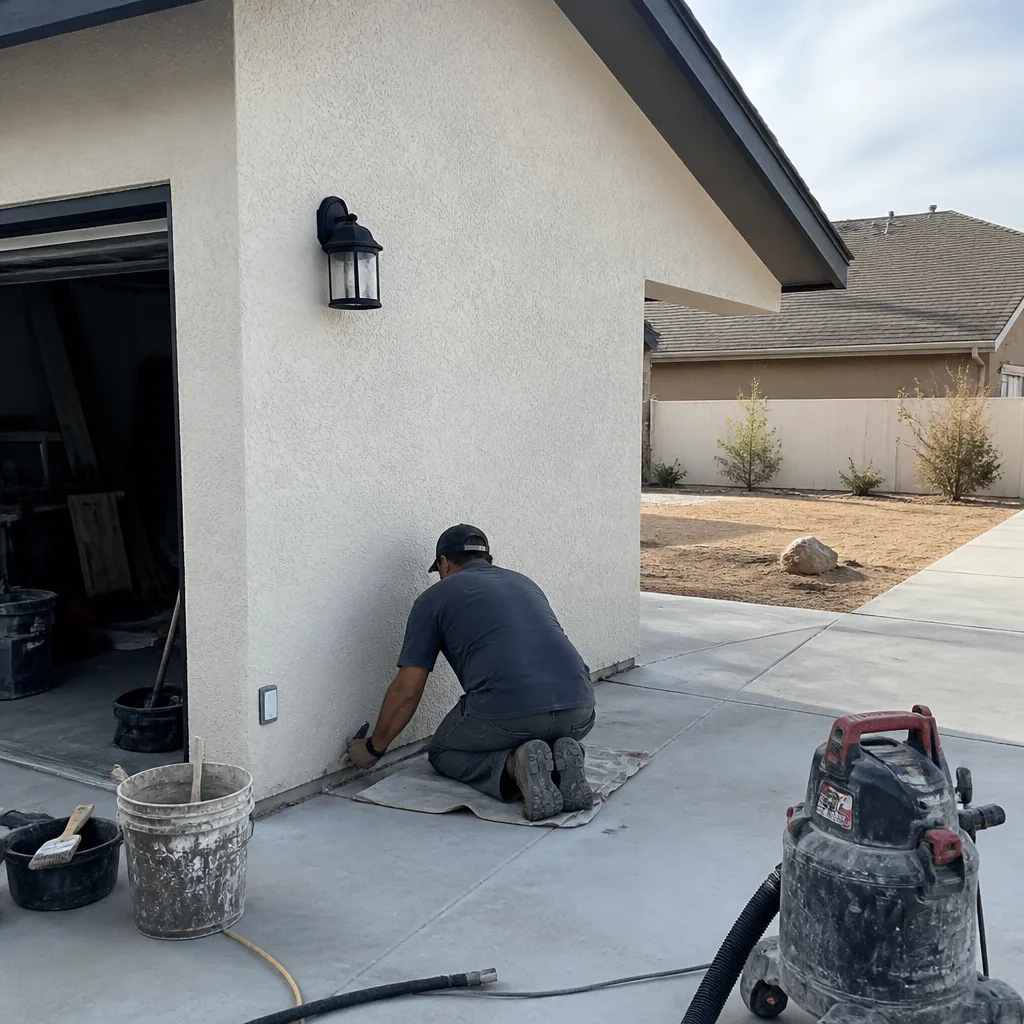
- Look at stucco control joints. Freeze-thaw pops loose caulk out of control joints, which then channel water behind the stucco system.
- Check paver patios for heaving. Individual pavers that have shifted more than 1/4 inch out of plane indicate base material settlement that won’t fix itself.
February is a diagnostic month. You’re not fixing things in February. You’re identifying what needs to be on the spring repair list.
Why Spring Is the Foundation and Below-Grade Window in the High Desert
Foundation and below-grade work in Hesperia needs two conditions that only overlap reliably from late March through May: soil that’s dried out enough to excavate without slumping, and temperatures cool enough that concrete cures without excessive shrinkage cracking. Our Complete General Contractor Guide for Hesperia Homeowners covers this in depth. Winter rains leave the high desert’s sandy loam soil saturated, which makes trench walls unstable. Summer heat causes fresh concrete to cure too fast, which produces shrinkage cracks and weakens the slab surface.
This matters for a specific reason in Hesperia: the native soil is expansive in places, particularly in the areas east of the 15 where clay content runs higher. Expansive soil swells when wet and shrinks when dry, and that movement is what causes slab cracks, sticking doors, and separation at exterior stair landings. Foundation repair, drainage correction, and below-grade waterproofing all depend on working with the soil’s moisture cycle, not against it.
If you’re planning a foundation repair, a retaining wall, or below-grade waterproofing, here’s the sequencing logic:
- Late February: Schedule the structural inspection. The soil is at peak moisture, which means cracks are at their widest and easiest to read.
- March: Get engineering and permits moving. Hesperia building permits for foundation work typically take 2 to 4 weeks, and you want the permit in hand by the time the soil dries enough to dig.
- April to mid-May: Execute the below-grade work. Concrete poured in this window hits the sweet spot for cure strength.
- June: Backfill, compact, and let the work settle through the summer dry season before any cosmetic finishes go on top.
The same logic applies to new ADU foundations, and it’s one reason prefab ADU partners like Abodu, Dvele, and Plant Prefab recommend spring site work for Hesperia installations. The concrete and site prep happen when conditions are controllable, and the prefab structure goes on top once the foundation has cured properly.
Sequencing a Whole-Home Project Around Hesperia’s Climate
If you’re planning a significant remodel or multi-phase renovation, which is what Hampton Contractors home specializes in, the Hesperia calendar doesn’t just affect maintenance. It dictates project sequencing. Doing phases in the wrong order locks you out of the next available weather window and pushes the project across two or three years instead of one.
Here’s the sequence that works for exterior and whole-home work in Hesperia:
- Design and permits: January through March. Interior planning can happen any time, but if exterior work is involved, you want permits ready to pull when the weather window opens. Hesperia’s permit review times are typically fastest in the winter when application volume drops.
- Foundation and below-grade work: April through mid-May. Covered in the section above. This is also the window for new ADU site work.
- Framing, rough mechanicals, and exterior envelope: May through September. Framing can happen in summer heat, but crews need early start times. Roofing should ideally be done in May or June before the July heat makes shingles too malleable to walk on safely. Window and door installation is fine through summer.
- Exterior finish work (paint, caulk, stucco color coat): late September through early November. This is the non-negotiable window discussed earlier. If framing and envelope work slip past August, exterior finishes wait until the following fall.
- Interior finishes: November through February. Interior work is climate-controlled and unaffected by the weather outside. This is when kitchens, bathrooms, flooring, and trim get done. It’s also when most of the recognizable brand materials go in: KraftMaid or Wellborn cabinets, Cambria or Silestone countertops, Kohler or Moen fixtures.
- Hardscaping and fencing: March through May of the following year. Pavers and fencing go in after the wet season, when the soil has settled and excavation conditions are stable.
This sequence compresses a whole-home project into roughly 14 to 16 months and hits every weather-dependent trade in its optimal window. It’s the difference between a project that flows and one that stalls at every season change. For Hesperia homeowners researching a home remodeling project in Hesperia, this calendar awareness is the single most valuable planning insight that most people don’t discover until they’re already behind schedule.
Material Choices That Hold Up in Hesperia’s Specific Conditions
The material you choose is a maintenance decision as much as an aesthetic one. In Hesperia, certain products fail predictably and certain products are engineered for exactly these conditions. Part of what a general contractor in Hesperia should bring to the table is knowledge of which brands spec for high-UV, high-wind, freeze-thaw environments, and which ones are really designed for milder climates.
What we’ve learned holds up here, and what we steer clients toward:
- Roofing: GAF, CertainTeed, and Owens Corning all manufacture high-wind-rated shingle lines, and all three have contractor certification programs that require installation training specific to high-wind and high-heat climates. For Hesperia, we prioritize shingles with a 110 mph or higher wind rating and algae-resistant granules, which also resist the UV bleaching that’s common at elevation.
- Siding: James Hardie fiber cement siding is the dominant choice for Hesperia exteriors because it doesn’t melt in heat, doesn’t fade like vinyl, and holds paint longer than wood or stucco. It’s heavier and more expensive to install, which is why it matters that the installer actually knows the product’s fastening and gap schedule.
- Windows and doors: PGT and CGI both manufacture impact-rated products designed for the Southwest market, and Therma-Tru builds entry doors with fiberglass skins that don’t warp in low-humidity heat. For Hesperia’s intense westerly sun, low-E glass coatings are not optional, and argon-filled double panes lose gas over time in the temperature swings, so check the warranty length before you buy.
- Fencing: Master Halco and Ameristar both make steel and aluminum fence systems with powder coatings rated for high-UV exposure. For wood fencing, Jerith aluminum posts with cedar or redwood infill solve the post-rot problem permanently.
- Hardscaping: Belgard, Unilock, and Techo-Bloc all manufacture pavers with high solar reflectance options, which matters on Hesperia patios where dark pavers get too hot to walk on in July. The paver manufacturer’s warranty also covers color fade, which is worth reading before you choose a color.
- Plumbing fixtures: For exterior hose bibs and any outdoor plumbing, we recommend American Standard and Toto products because they spec brass internals that hold up better than plastic in Hesperia’s hard water. Kohler and Moen are the go-to for interior bathrooms and kitchens, where the hard water still matters but the fixtures are protected from the freeze-thaw cycle.
In every category, the warranty language matters more in Hesperia than it does in Los Angeles or San Diego. Manufacturers write specific exclusions for high-temperature and high-UV installations, and if the installer doesn’t know those exclusions, the warranty is worthless before the first summer ends.
Common Mistakes to Avoid
- Painting the exterior in July because it’s convenient. Surface temps above 90°F cause latex paint to skin over prematurely, and the blistering that follows isn’t covered by warranty. It fails within the first season, and you pay to do it again properly in October.
- Skipping the pre-Santa-Ana roof check. A lifted shingle tab or cracked ridge cap that costs $300 to fix in October becomes a $3,000 roof repair and a $2,000 interior drywall job after the first big wind event of November.
- Ignoring hairline cracks in concrete. Freeze-thaw in Hesperia widens those cracks every winter. A $200 crack repair in March prevents a $6,000 slab replacement in three years.
- Installing dark composite decking without checking surface temperature ratings. Dark boards in Hesperia’s July sun hit 160°F, which is hot enough to burn bare feet and voids some manufacturers’ heat-related warranties.
- Doing foundation work in summer. Concrete poured when daytime temps are above 90°F cures too fast, producing shrinkage cracks and a weaker slab. Spring is the foundation window, and it’s not negotiable.
- Replacing windows without upgrading the low-E coating. Standard double-pane glass doesn’t manage Hesperia’s western sun. You’ll replace glass twice: once for the frames, once for the solar gain you didn’t solve the first time.
- Assuming a coastal contractor understands the High Desert. Material choices, caulk types, paint formulas, and installation schedules are all climate-specific. The contractor who’s been painting Rancho Cucamonga houses for ten years doesn’t know what 150°F stucco does to an elastomeric coating unless he’s worked up here.
When to Call a Professional
Most of the inspection work in this guide is DIY-friendly. Most of the repair work is not. Call a professional when you see: roof leaks or lifted shingles on windward exposures, stucco cracks wider than 1/8 inch or diagonal cracks radiating from window corners, concrete slabs that have shifted more than 1/4 inch out of plane, any sign of water staining on interior ceilings or walls, or fencing sections pulling away from posts after a wind event. These indicate structural or envelope failures that will compound if you try to patch them. For home renovation in Hesperia that involves exterior work, the earlier a contractor sees the problem, the fewer trade repairs are needed. Hampton Contractors offers free estimates in Hesperia, call (833) 467-4075.
Frequently Asked Questions
Seasonal maintenance costs in Hesperia vary by scope, but typical line items include: exterior caulk and paint touch-up ($800 – $2,500 depending on square footage), roof inspection and minor repair ($250 – $600), gutter cleaning ($150 – $350), concrete crack repair ($200 – $800 per crack), and irrigation system winterization ($150 – $300). A full pre-Santa-Ana inspection covering roof, fencing, and outdoor structures typically falls between $400 and $800. Call (833) 467-4075 for a detailed quote on your specific property, estimates are free.
Latex paint requires surface temperatures below 85°F to cure properly, and Hesperia’s south-facing stucco exceeds 150°F on summer afternoons. The paint skins over before the solvents escape, causing blistering within the first year, and the manufacturer’s warranty excludes installation above the stated temperature range. The only reliable exterior painting window in Hesperia is late September through early November.
Schedule roof inspection and repair work in May, June, or late September. May and June are ideal because the shingles are warm enough to seal but not so hot that walking compresses and damages them. Late September is the secondary window before Santa Ana winds arrive in October and November. Call (833) 467-4075 to have a contractor check your roof before the wind season starts.
Yes. Hesperia experiences 20 to 30 freeze nights each winter, and water left in above-ground valves, backflow preventers, and exposed PVC will freeze and split. Winterization means draining the system completely and insulating or removing exposed components. The February inspection is also worth doing even after winterization, because the freeze-thaw cycle will reveal any spots where water pooled and froze.
Install pavers between March and May, after winter rains have saturated the soil and then dried enough to compact properly, but before summer heat makes the base material too dry to achieve proper compaction density. Fall installation is possible but runs into rain interruptions that pause the project. Spring is the window where excavation, compaction, and paver installation all happen without weather-driven rework.
The prefab structure can be installed year-round, but site work (foundation, utilities, grading) should be done in spring when soil conditions are stable. Hesperia’s expansive soils shrink and swell with moisture changes, and a foundation poured in the wrong season sets an ADU up for future movement. Hampton Contractors works with Abodu, Dvele, Mighty Buildings, and Plant Prefab to sequence ADU site work correctly for the High Desert climate. See Choosing the Right Construction Brand: A Buyer’s Guide for Hesperia for help selecting partners. Call (833) 467-4075 to get the timeline right from the start.
The Bottom Line
Hesperia’s climate is the highest-stakes maintenance schedule in Southern California. The summer sun is a material degrader, the fall winds are a structural load test, the winter freeze-thaw cycle is a crack widener, and the spring is the only window for foundation work. Map your home’s maintenance and project calendar to those conditions, and every repair lasts longer. Fight the calendar, and you’ll pay for the same work twice. The homeowner who plans around late September paint windows, pre-November roof inspections, February concrete checks, and spring foundation work is the one whose house holds its value in the High Desert.
Written by the team at Hampton Contractors, serving Hesperia since 2016.
See the difference
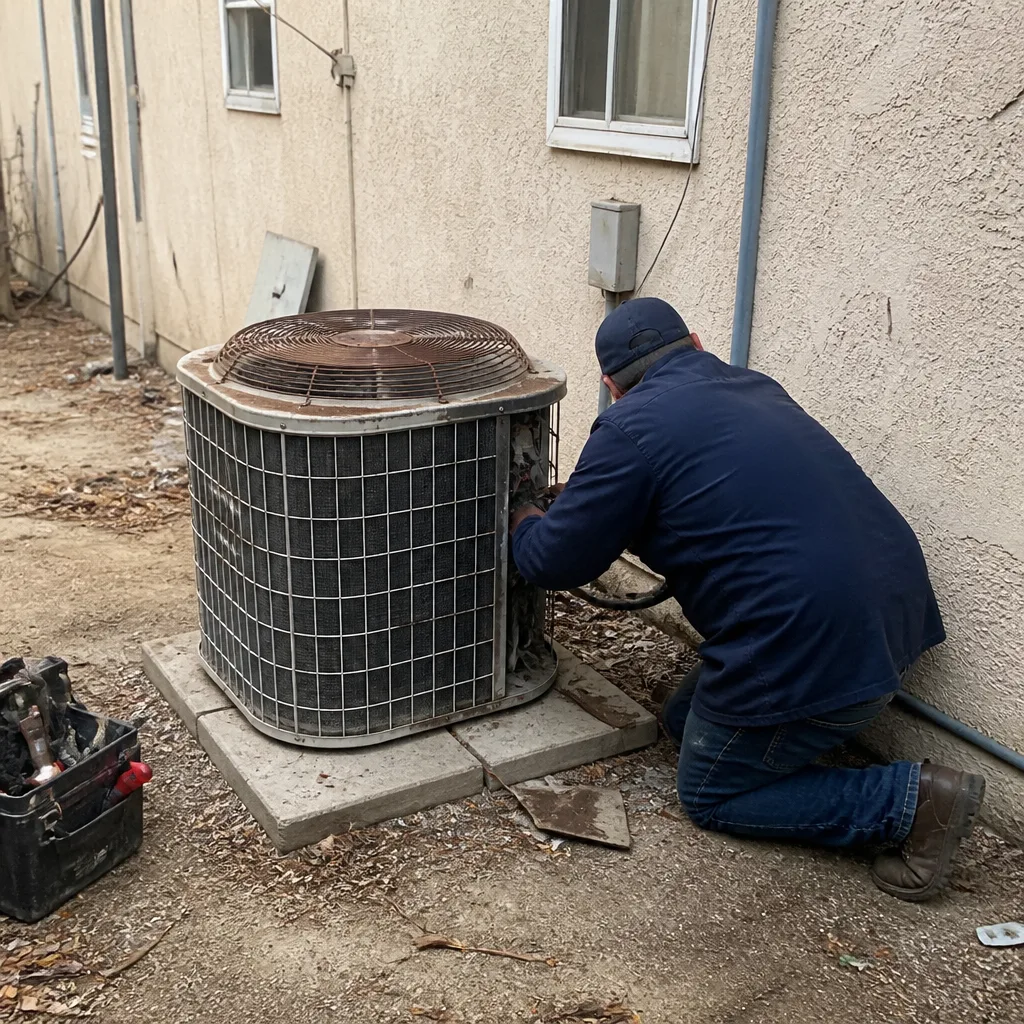 Before
 After
 Before
 After
 Before
 After